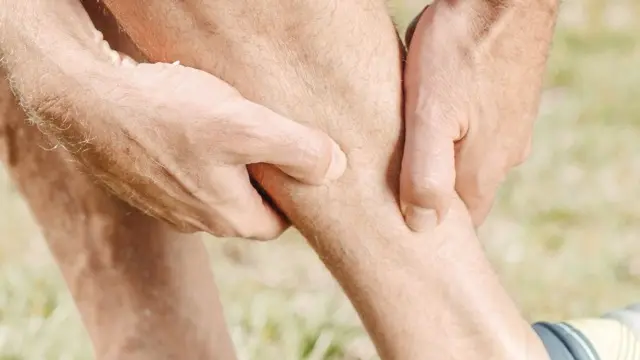
Emergency signs: a bleeding vein that will not stop with firm pressure; sudden swelling, pain and warmth in one leg; chest pain, breathlessness or coughing up blood; fever with spreading redness. Call 995. For bleeding: lie down, raise the leg and press firmly with a clean cloth.
Complications of varicose veins: the calm overview
Most varicose veins cause nothing worse than appearance or discomfort. A minority of people, however, develop complications, particularly when the veins are long-standing or untreated. Knowing what they look like helps you act early without needless worry. This page explains the main complications of varicose veins, what to do and when to get help. For a view of how serious varicose veins are overall, see when to worry about varicose veins.
Many complications are linked to the underlying problem of chronic venous insufficiency, where leaking valves keep pressure high in the lower leg.
Skin changes
This is the most common group of varicose vein complications. High pressure forces fluid and blood cells into the skin around the ankle. Over time you may see:
- Itching and dryness, sometimes eczema (stasis dermatitis)
- Brown or purplish staining
- Skin that feels tight, hard or thickened
- White scarred patches
- Swelling that builds over the day
These changes show that the veins have been under pressure for some time. They are a good reason for a medical check, because early care reduces the chance of the skin breaking down.
Inflamed or clotted superficial veins
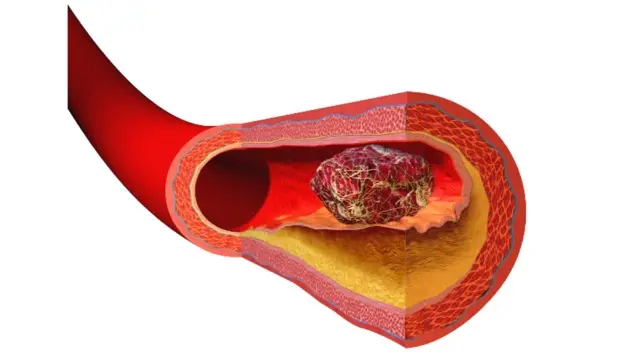
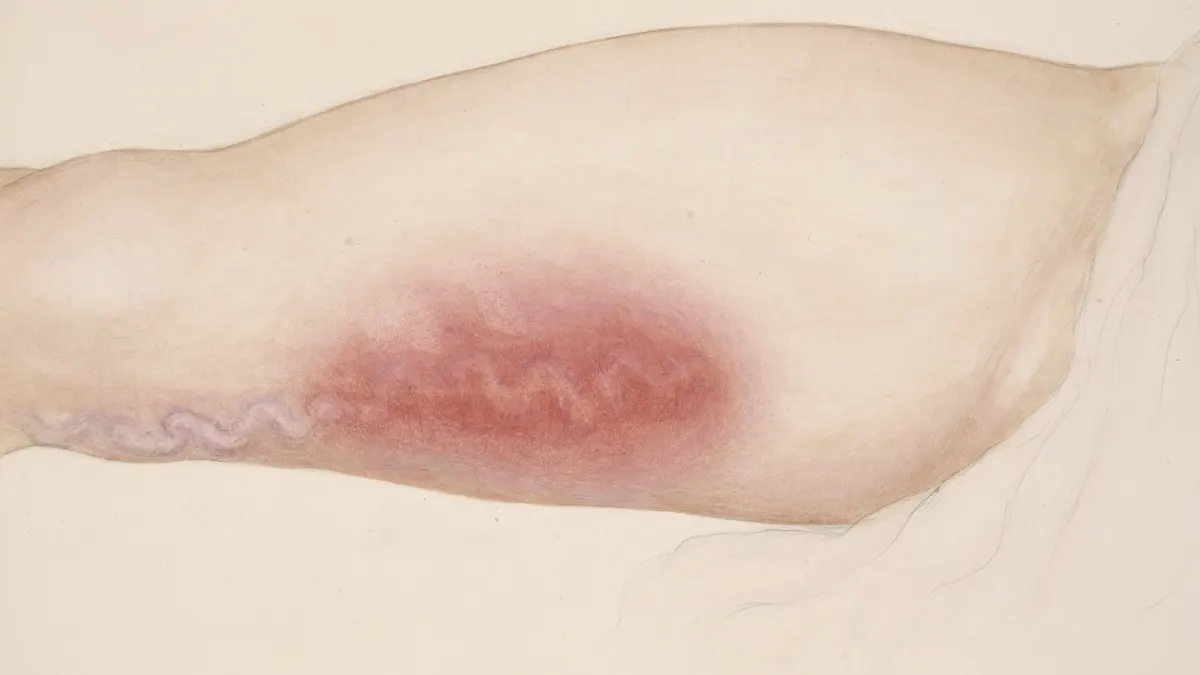
A varicose vein can become inflamed, and a small clot may form inside it. This is called superficial vein thrombosis or thrombophlebitis. It typically feels like a firm, tender, warm, red cord along the vein. See phlebitis for more detail.
It is generally less dangerous than a clot in a deep vein, but a doctor should check it, as occasionally the clot is close to the deep system or a deep clot is present too. Treatment is usually supportive, though some cases need further assessment with an ultrasound.
Bleeding
Varicose veins near the skin, especially around the ankle, can have very thin skin over them. A knock or scratch may cause a vein to bleed. Because the blood in these veins is under pressure, it may look dramatic and bleed more than expected. It is uncommon but can be frightening. Our page on burst veins in the leg covers this further.
Bleeding first aid:
- Lie down immediately.
- Raise the leg above the level of your heart, for example on pillows.
- Press firmly on the bleeding point with a clean cloth or dressing, and keep pressing without lifting it to check.
- Maintain pressure for at least ten minutes.
- Call 995 if bleeding does not stop, is heavy, or you feel faint.
Even if it stops, have the vein assessed soon, since bleeding may recur. Do not remove stuck dressings forcefully. Elevate the leg and keep it still until help arrives.
Deep vein thrombosis
Varicose veins are linked to a somewhat higher chance of deep vein thrombosis, a clot in the deep veins, though most people with varicose veins never develop one. It causes pain, swelling, warmth and redness, usually in one leg. If part of a clot breaks away and reaches the lungs, it causes a pulmonary embolism, which is an emergency. If you suspect either, call 995. Read more in deep vein thrombosis and blood clot in leg symptoms.
Leg ulcers
If skin changes progress, a minor injury can turn into a sore that heals slowly, usually near the inner ankle. These venous ulcers can last weeks to months, may weep and can become infected. Early treatment of the veins and good wound care improve healing. See venous leg ulcers and the difference between arterial and venous ulcers.
Infection
Damaged, dry or broken skin is more open to infection such as cellulitis. Signs include spreading redness, warmth, swelling, pain and fever. This needs prompt medical treatment.
How often do these happen?
Honest numbers are hard to give because studies differ in who they include and how long they follow people. In general, skin changes and swelling are common in people with long-standing varicose veins, inflamed veins happen to a fair number of people, and bleeding, ulcers and deep clots are less common. Many people live with varicose veins for decades without a serious problem. The risk rises with age, with more severe vein disease, with a history of clots and when skin changes are already present. This is why a doctor looks at your overall picture rather than the look of the veins alone. If you are worried about the bigger picture, our page on chronic venous insufficiency dangers may help.
Can complications be prevented?
You cannot guarantee prevention, but these steps lower the risk:
- Keep moving and avoid long spells of standing or sitting
- Raise your legs when resting
- Consider properly fitted compression if advised
- Moisturise and protect the skin around the ankle
- Treat even small cuts early
- Ask about a scan if you have symptoms or skin changes
Treating the leaking veins may also reduce the chance of some complications; see varicose vein treatments compared.
Living sensibly with varicose veins
Knowing the warning signs is usually enough. Look at your ankles and shins every so often, check for new patches of darker or dry skin, and notice whether swelling is creeping up. Protect the area from knocks, avoid scratching, and mention any change at your next check-up. Most people who do this stay well, and the few who develop a problem are more likely to catch it early.
When to see a doctor
See a doctor if you notice skin changes at the ankle, a tender red cord along a vein, recurring swelling or a sore that does not heal. Get same-day care for fever, hot spreading redness or a painful, swollen leg. Call 995 for bleeding that will not stop, chest pain, breathlessness, coughing blood or sudden one-sided leg swelling with pain.
Try the vein symptom check or learn how to find a vein specialist. Terms are explained in the glossary. This article is general education and does not replace medical advice.
Frequently asked questions
How common are complications of varicose veins?
Mild complications such as skin irritation, swelling and inflamed veins are fairly common, especially when varicose veins are long-standing. Serious ones like bleeding or ulcers affect a minority of people. Exact figures vary between studies and populations.
What should I do if a varicose vein bleeds?
Lie down straight away, raise the leg above heart level and press firmly on the spot with a clean cloth or dressing. Keep pressing for at least ten minutes without peeking. If bleeding does not stop, or is heavy, call 995. Have any bleed assessed afterwards even if it stops, because it can happen again.
Can a varicose vein cause a blood clot?
A clot can form in a superficial varicose vein, called superficial vein thrombosis or thrombophlebitis. This is usually painful, firm and red but is generally less dangerous than a clot in a deep vein. A doctor should review it, since sometimes a deep clot is involved.
Do varicose veins cause leg ulcers?
They can contribute. Long-standing high pressure in the veins can damage the skin around the ankle so that a small injury becomes an open sore that heals slowly. Early treatment of skin changes helps lower this risk.
Can treatment prevent complications?
Treating the leaking veins can reduce symptoms and may reduce the risk of some complications, such as recurrent inflammation, bleeding or ulcers, depending on the person. It does not remove all risk. A doctor can advise based on a scan.
Sources and further reading
This article is general information, not personal medical advice. Please speak to a doctor about your own symptoms. How we create our content.