Before treatment: the scan that decides everything
Every good treatment plan starts with a duplex ultrasound scan. It shows which vein is leaking (most often the great saphenous vein on the inner leg, or the small saphenous vein at the back of the calf), its diameter and depth, how twisted it is, and whether the deep veins are healthy.
Your specialist uses these findings — together with your symptoms, general health, medicines and preferences — to suggest options. The treatments below fall into three groups:
- Closing the main leaking vein — thermal ablation (RFA, laser), VenaSeal, ClariVein, or foam sclerotherapy.
- Dealing with visible bulging branches — mini-phlebectomy or sclerotherapy.
- Treating spider veins — sclerotherapy, VeinGogh or surface laser.
Closing a faulty vein does not harm your circulation. Blood that was flowing the wrong way simply reroutes through healthy veins.
At a glance
| Treatment | How it works | Anaesthesia | Typical return to normal activity | Best for |
|---|---|---|---|---|
| Radiofrequency ablation (RFA) | Heat from a catheter seals the vein | Local, with numbing fluid along the vein | 1–2 days | Leaking main surface veins |
| Endovenous laser ablation (EVLA) | Laser energy seals the vein | Local, with numbing fluid along the vein | 1–2 days | Leaking main surface veins |
| VenaSeal | Medical adhesive glues the vein shut | Local at the entry point only | Same or next day | Main veins; people wanting fewer injections |
| ClariVein (MOCA) | Rotating wire + sclerosant medicine | Local at the entry point only | Same or next day | Main veins, including near nerves |
| Ultrasound-guided foam sclerotherapy | Injected foam inflames and closes the vein | None or minimal | Same day | Smaller, twisted or recurrent veins |
| Mini-phlebectomy | Bulging veins removed through tiny nicks | Local | 1–2 days | Visible varicose branches |
| Open surgery (ligation and stripping) | Vein tied and removed | General or spinal | 1–3 weeks | Now uncommon; selected cases |
Recovery times are typical ranges. Your doctor’s advice for your situation comes first.
Thermal ablation: radiofrequency (RFA) and laser (EVLA)
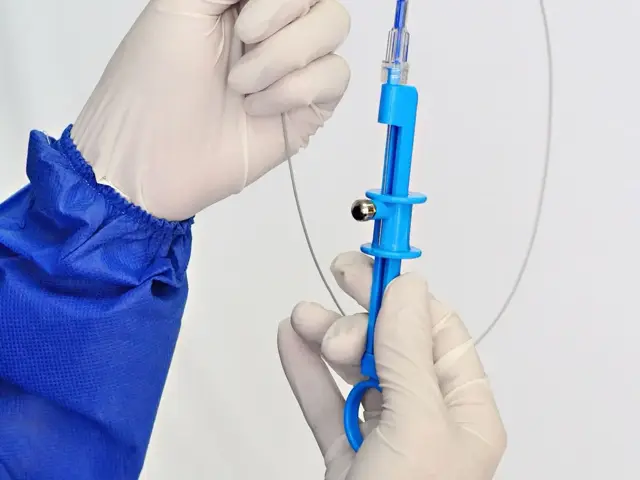
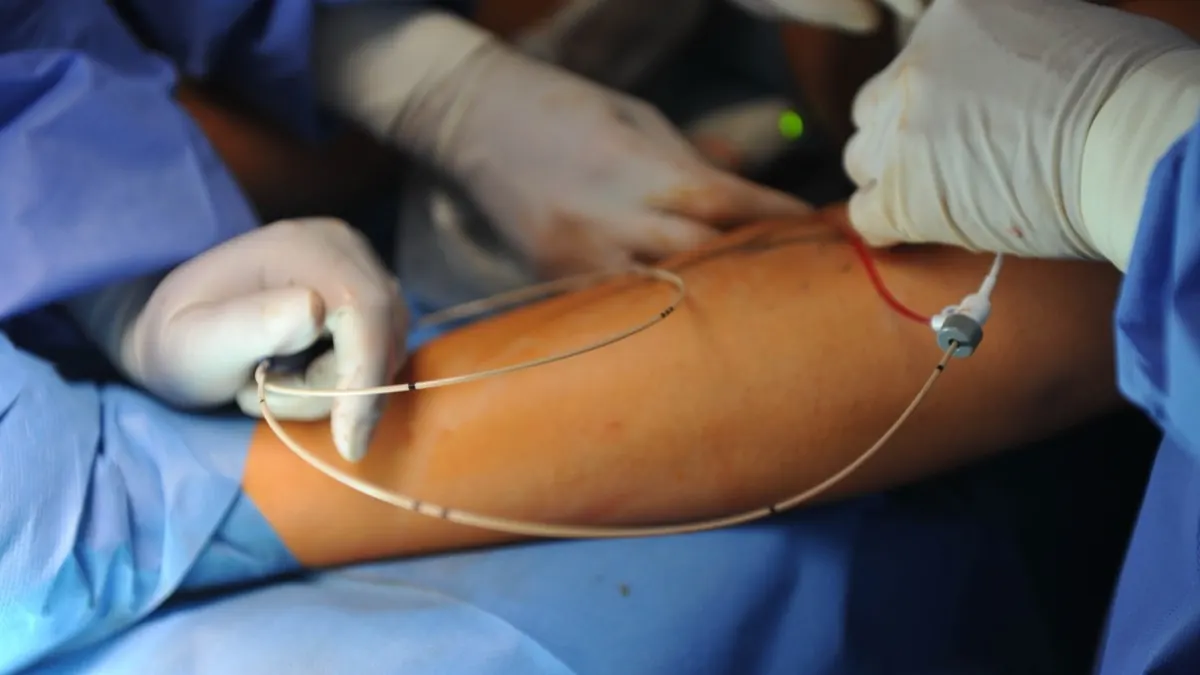
How it works. Under ultrasound guidance, a thin catheter or laser fibre is passed into the faulty vein through a single needle puncture, usually near the knee. Numbing fluid (tumescent anaesthesia) is injected around the vein to protect surrounding tissue. The device then heats the vein wall from the inside, causing it to collapse and seal. Over the following months the body absorbs it.
Pros
- Longest track record of the modern treatments, with high closure rates in long-term studies
- Recommended as first-line treatment for leaking main surface veins in the ESVS 2022 and NICE guidelines
- Done under local anaesthetic; walk immediately afterwards
Cons
- Several small numbing injections along the vein can be uncomfortable
- Tightness and bruising along the treated vein for one to two weeks are common
- Small risk of temporary numbness or tingling from heat near skin nerves
- Compression stockings are usually advised for a period afterwards
If you’re considering it, these common questions about radiofrequency ablation are worth reading before your consultation.
VenaSeal (cyanoacrylate adhesive closure)
How it works. A catheter delivers tiny amounts of medical-grade adhesive along the vein while gentle pressure is applied on the skin above, sealing the vein closed. No heat is used, so the tumescent injections are not needed.
Pros
- Usually only one needle puncture
- Little discomfort during and after the procedure
- Many patients don’t need compression stockings afterwards
- Quick return to normal activities
Cons
- A small proportion of people develop a temporary itchy, red, inflammatory reaction along the vein
- The adhesive stays in the body (in very small amounts); people with known allergies to adhesives should discuss this
- Long-term data is good but shorter than for thermal ablation
ClariVein (mechanochemical ablation, MOCA)
How it works. A catheter with a rotating wire tip is pulled slowly through the vein while a sclerosant medicine is released. The spinning wire irritates the vein lining so the medicine works more effectively.
Pros
- No heat and no tumescent injections
- Low risk of nerve injury, so it can suit veins below the knee or close to nerves
- Minimal downtime
Cons
- Some studies show slightly lower long-term closure rates than thermal ablation for larger veins
- Not suitable for every vein size or shape
For more on how the non-thermal options compare, see radiofrequency ablation vs VenaSeal.
Ultrasound-guided foam sclerotherapy
How it works. A sclerosant medicine is mixed with air or gas to make a foam, then injected into the vein under ultrasound guidance. The foam pushes blood out of the vein and inflames its lining so it closes.
Pros
- No cuts and no anaesthetic
- Quick and often lower in cost
- Useful for twisted, smaller or recurrent veins that catheters can’t easily pass through
Cons
- Higher chance that a vein reopens, so repeat sessions are more common
- Temporary brown staining or lumps along treated veins can occur
- Rare side effects include headache or brief visual disturbance
Mini-phlebectomy (ambulatory phlebectomy)
How it works. Under local anaesthetic, bulging surface veins are removed through tiny 2–3 mm nicks in the skin, which usually heal without stitches. It is often combined with ablation in the same session so that both the “source” and the visible branches are treated.
Pros: immediate removal of visible lumps; excellent cosmetic results.
Cons: bruising for a couple of weeks; tiny scars that fade over months.
Open surgery: ligation and stripping
This is the traditional operation — tying the vein at the groin or behind the knee and pulling it out. Because endovenous treatments offer faster recovery, less pain and fewer complications, surgery is now used much less often. It may still be considered for some veins that are unsuitable for catheter treatments.
Treatments for spider veins
Spider veins are usually treated for cosmetic reasons, although they can cause itching or burning. Options include:
- Microsclerotherapy: a fine needle injects a sclerosant into the tiny veins. Several sessions are usually needed.
- VeinGogh (ohmic thermolysis): a hair-thin probe delivers bursts of energy to seal very fine veins, including on the face.
- Surface laser: light energy targets small veins through the skin.
If spider veins are fed by deeper reflux, treating the underlying vein first gives better and longer-lasting results.
How to choose: questions to ask your specialist
- Which veins are leaking on my scan, and how severe is it?
- What would happen if I don’t treat now?
- Which options are suitable for me, and why do you recommend this one?
- How many sessions should I expect, including for visible branches?
- Will I need compression stockings, and for how long?
- What are the total costs, and is the procedure likely to be claimable under MediSave or my insurance? (See our cost and MediSave guide.)
What happens after treatment
Many people go home the same day and return to desk work within a few days, though recovery varies. Read our week-by-week recovery guide to know what’s normal and which warning signs to watch for.
Frequently asked questions
Which varicose vein treatment is the best?
There is no single best treatment for everyone. For a leaking great or small saphenous vein, thermal ablation has the longest track record. VenaSeal and ClariVein are good alternatives in many cases. Your specialist will recommend options based on your scan.
Is laser or radiofrequency better?
Both are forms of thermal ablation with similar success rates in studies. Radiofrequency ablation is often associated with slightly less post-procedure bruising and discomfort than older laser wavelengths, though modern lasers have narrowed the gap.
Will I need more than one treatment?
Often the main leaking vein is closed in one session, and any remaining surface veins are treated at the same time with phlebectomy or later with sclerotherapy. Spider veins typically need several sclerotherapy sessions.
Do I still need vein stripping surgery?
Rarely. Traditional stripping has largely been replaced by endovenous treatments because recovery is faster and complication rates are lower. Surgery may still be considered for some unusual vein anatomy.
Sources and further reading
This article is general information, not personal medical advice. Please speak to a doctor about your own symptoms. How we create our content.