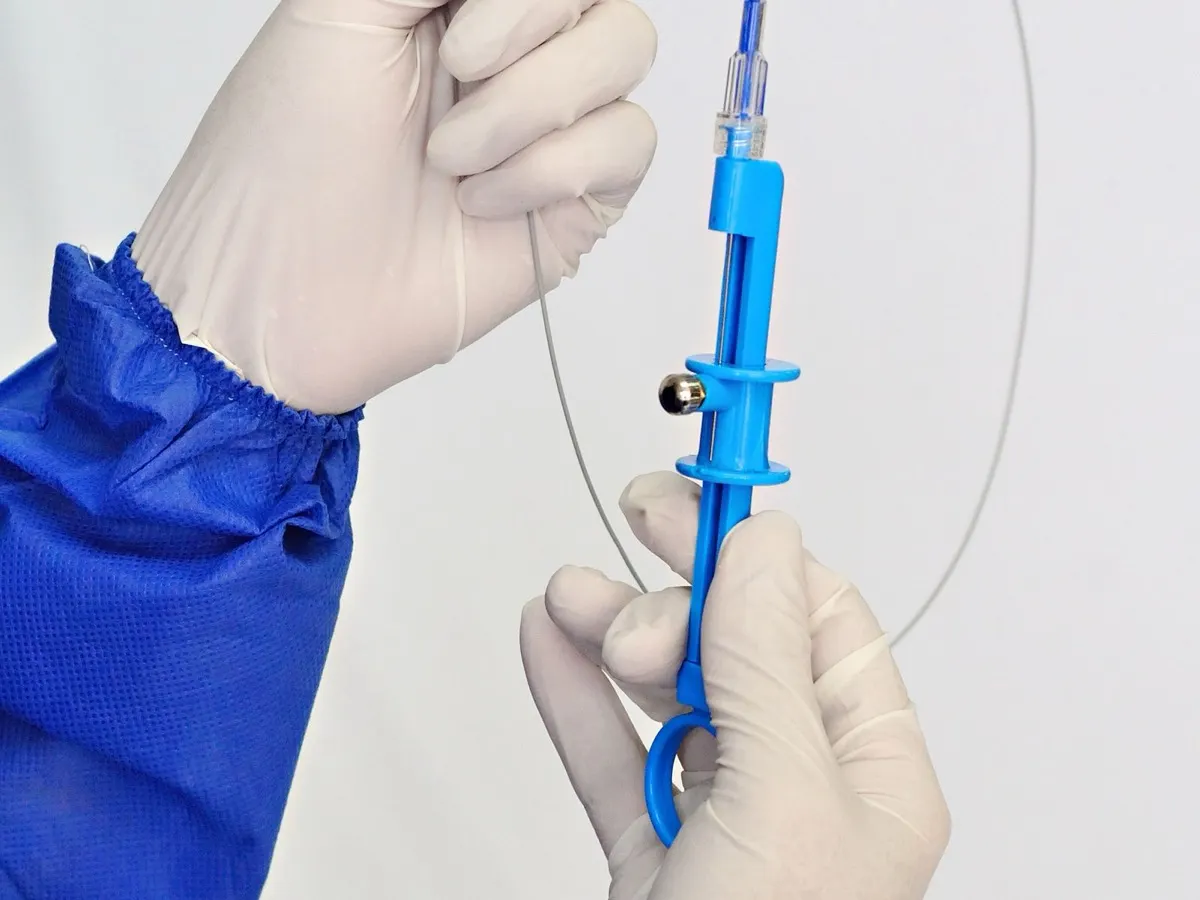
What is ClariVein?
ClariVein is a brand name for a device used in a procedure called mechanochemical ablation, often shortened to MOCA or MCA. It closes a leaking vein without using heat. If you have been told you might be suited to ClariVein, or you are comparing it with other options, this guide explains what it does, what to expect and how it fits among the alternatives.
The target is the same as for other vein procedures. In many people with varicose veins, the main surface veins in the leg, usually the great saphenous or small saphenous vein, have faulty one-way valves. Blood leaks backwards, pools and drives up pressure, which is called venous reflux. Closing the diseased trunk vein redirects blood to healthier veins. For background on the underlying problem, see varicose veins: symptoms and causes.
How mechanochemical ablation works
The name describes the two actions that happen together:
- Mechanical. A very thin catheter is passed into the vein. At its tip is a small wire that rotates quickly and gently scratches the inner lining of the vein, making it spasm and narrow.
- Chemical. As the catheter is slowly pulled back, a liquid sclerosing medicine is released along the vein wall. This irritates the lining so that the vein collapses and seals.
Over the following weeks and months, the closed vein is gradually absorbed by the body. Because the vein is no longer carrying blood, symptoms such as aching and swelling often ease. A similar chemical effect underlies sclerotherapy, but ClariVein delivers it in a controlled way through a catheter, which makes it suited to larger trunk veins.
What the procedure is like
Details vary by clinic, but a typical ClariVein visit looks like this:
- Assessment and scan. A duplex ultrasound maps your veins, confirms which one is leaking and checks that it is suitable for this method.
- Positioning and numbing. You lie on a couch and the skin where the catheter will enter, often near the knee or lower leg, is numbed with local anaesthetic.
- Catheter placement. Using ultrasound guidance, the doctor places the catheter inside the vein.
- Treatment. The rotating tip is switched on and the catheter is withdrawn steadily while the medicine is delivered.
- Finishing. The catheter is removed, a dressing is applied and compression is usually advised for a period. You can generally leave soon afterwards.
You are awake throughout and many people feel a mild pulling or cramping sensation rather than pain. Because there is no heat, the procedure generally avoids the need for large amounts of numbing fluid around the vein, which is one reason some people prefer it. Whether it is available depends on the clinic.
Who might consider it
ClariVein may be discussed if:
- a duplex scan shows reflux in a straight, accessible trunk vein
- you are worried about the discomfort of heat-based treatment
- you have a vein located close to a nerve, where heat could be a concern
- other methods are not suitable for you
It may be less suitable for very large or very tortuous veins, or if previous clots have scarred the vein. Your specialist will explain the reasoning in your case. Each method has strengths, and no single one is right for everyone. For the bigger picture, see varicose vein treatments compared, and for the heat-based and glue options see vein ablation and VenaSeal.
Practice guidelines such as NICE CG168 generally recommend heat-based endovenous ablation as the first choice where it is suitable, then ultrasound-guided foam sclerotherapy, then surgery. NICE has also reviewed mechanochemical ablation as a procedure in its own guidance, so it is a recognised option rather than an experimental one, although the evidence base is smaller than for older methods. The ESVS 2022 guideline likewise treats non-thermal techniques as reasonable alternatives in suitable patients. If you would like to understand how a Singapore practice describes the technique, one clinic’s page covers ClariVein in their FAQ.
Recovery and aftercare
Recovery is usually quick, but it is individual. In general:
- You are encouraged to walk straight away, which helps blood move through the deeper veins.
- Compression stockings or bandages are often advised for a short time. Follow your clinic’s instructions on how long.
- Light daily activities are typically resumed within days. Ask about exercise, heavy lifting, long flights and hot baths.
- Some bruising, tenderness or a firm cord along the treated vein is common and settles with time.
Our page on recovery after varicose vein treatment goes through what is normal week by week, and our compression stockings guide explains how to wear them.
Questions worth asking before you decide
A good consultation should leave you able to explain, in your own words, why a particular method has been chosen. Useful questions include:
- Which vein is leaking, and how large is it on the scan?
- Why is mechanochemical ablation being suggested over heat-based treatment or glue?
- What is the chance the vein will need retreatment, and how will closure be checked?
- Will I need compression afterwards, and for how long?
- What will happen if I decide to wait or only use conservative measures?
- Are there extra procedures, such as treating branch veins, that might be needed later?
Asking these questions is normal. A reputable clinician will welcome them and will not pressure you to book on the spot.
Risks and limits
Every procedure carries some risk. For mechanochemical ablation, possible issues include:
- bruising, soreness, itching or skin discolouration along the treated vein
- inflammation of nearby surface veins (phlebitis)
- a vein that does not close completely, or reopens later, and may need further treatment
- rarely, a blood clot in the deep veins (DVT), which is uncommon but important to recognise
- an allergic or other reaction to the medicine, which is rare
A follow-up duplex scan after treatment is how doctors check whether the vein has actually closed. Treating one vein also does not cure the tendency to develop varicose veins, so new ones can appear over the years.
When to see a doctor
See your doctor promptly if, after any vein procedure, you notice:
- increasing pain, swelling, warmth or redness in the calf or thigh, especially in one leg
- a treated area that becomes very hard, hot or red
- bleeding that does not stop with gentle pressure
- fever or signs of infection
- an ulcer or skin changes near the ankle
Call 995 or go to the nearest emergency department if you have sudden chest pain, sudden breathlessness or cough up blood. These can be signs of a clot reaching the lung.
If you have varicose veins that ache, swell or are changing but you have not yet had them assessed, start with a visit to your GP or a vascular specialist, or try our vein symptom check. If you are looking for a specialist, our guide to finding a vein specialist explains what to look for. This page is general information and not a substitute for personal medical advice.
Frequently asked questions
What is ClariVein?
ClariVein is a branded device used for mechanochemical ablation. A thin catheter is placed inside the diseased vein, its tip rotates to irritate the vein lining while a liquid sclerosing medicine is released, and the vein then shrinks and closes over time.
Is ClariVein painful?
Most people describe mild discomfort rather than pain. Local anaesthetic is used where the catheter goes in, and because there is no heat, the procedure generally does not need the large volume of numbing fluid used with heat-based methods. Experience varies from person to person.
Is mechanochemical ablation better than laser or radiofrequency?
Not necessarily. Guidelines such as NICE CG168 usually put heat-based ablation first when it is suitable, and non-thermal methods are good alternatives for some people. Which is best depends on your vein size, shape and position, your preferences and local availability.
How long does a ClariVein procedure take?
The treatment itself is generally fairly short, but the whole visit includes assessment, ultrasound guidance, consent and a short rest afterwards. Your clinic can tell you how long to allow.
Can the vein come back after ClariVein?
A treated vein can sometimes reopen, which is why follow-up scans matter. Separately, new varicose veins can develop over the years because the tendency to vein disease remains.
Sources and further reading
- NICE Interventional Procedures Guidance IPG557: Endovenous mechanochemical ablation for varicose veins
- NICE Clinical Guideline CG168: Varicose veins — diagnosis and management
- European Society for Vascular Surgery (ESVS) 2022 Clinical Practice Guidelines on the Management of Chronic Venous Disease of the Lower Limbs
- NHS — Varicose veins: treatment
- NHS — Deep vein thrombosis (DVT)
This article is general information, not personal medical advice. Please speak to a doctor about your own symptoms. How we create our content.