What are medical compression stockings?
Medical compression stockings are specially knitted stockings or socks that squeeze the legs with a controlled amount of pressure. They are used to ease the symptoms of vein problems such as varicose veins and chronic venous insufficiency, and to manage swelling.
They are different from loose “support” hosiery or fashion socks sold for comfort. A genuine compression stocking is made to a recognised pressure standard, and the pressure is highest at the ankle.
How do compression stockings work?
Your leg veins rely on one-way valves and the calf muscle pump to push blood upwards. When valves leak, blood pools in the lower leg and pressure builds. Stockings help in three ways:
- They squeeze the veins from outside, making them narrower so blood moves faster.
- They support the calf muscle pump, so each step is more effective.
- They reduce the fluid that leaks into the tissues, easing swelling.
Compression treats symptoms rather than the cause. When you take them off, the leaking veins are still there. That is why stockings are one part of care and not a cure. For ways to close leaking veins, see varicose vein treatments compared.
Graduated compression stockings
The word graduated means the pressure changes along the leg. It is strongest at the ankle, then gradually decreases towards the knee or thigh. This gradient pushes blood towards the heart. Stockings with uniform pressure, or that are tighter at the top than the bottom, can do the opposite and should be avoided.
Understanding strengths (mmHg)
Pressure is measured in millimetres of mercury (mmHg). Classification systems differ between countries and manufacturers, so check the label. As a rough guide:
| Level | Approximate pressure | Typical use |
|---|---|---|
| Light | about 14 to 17 mmHg | Tired legs, mild swelling, travel, prevention |
| Medium | about 18 to 24 mmHg | Varicose veins, mild to moderate symptoms, pregnancy |
| Firm | about 25 to 35 mmHg | Chronic venous insufficiency, marked swelling, after some procedures |
| Extra firm | above 35 mmHg | Specialist use only, under medical guidance |
Higher is not automatically better. Firmer stockings are harder to put on and can be uncomfortable or unsafe if the fit or the diagnosis is wrong. Ask a healthcare professional to recommend the level.
Knee-high compression stockings
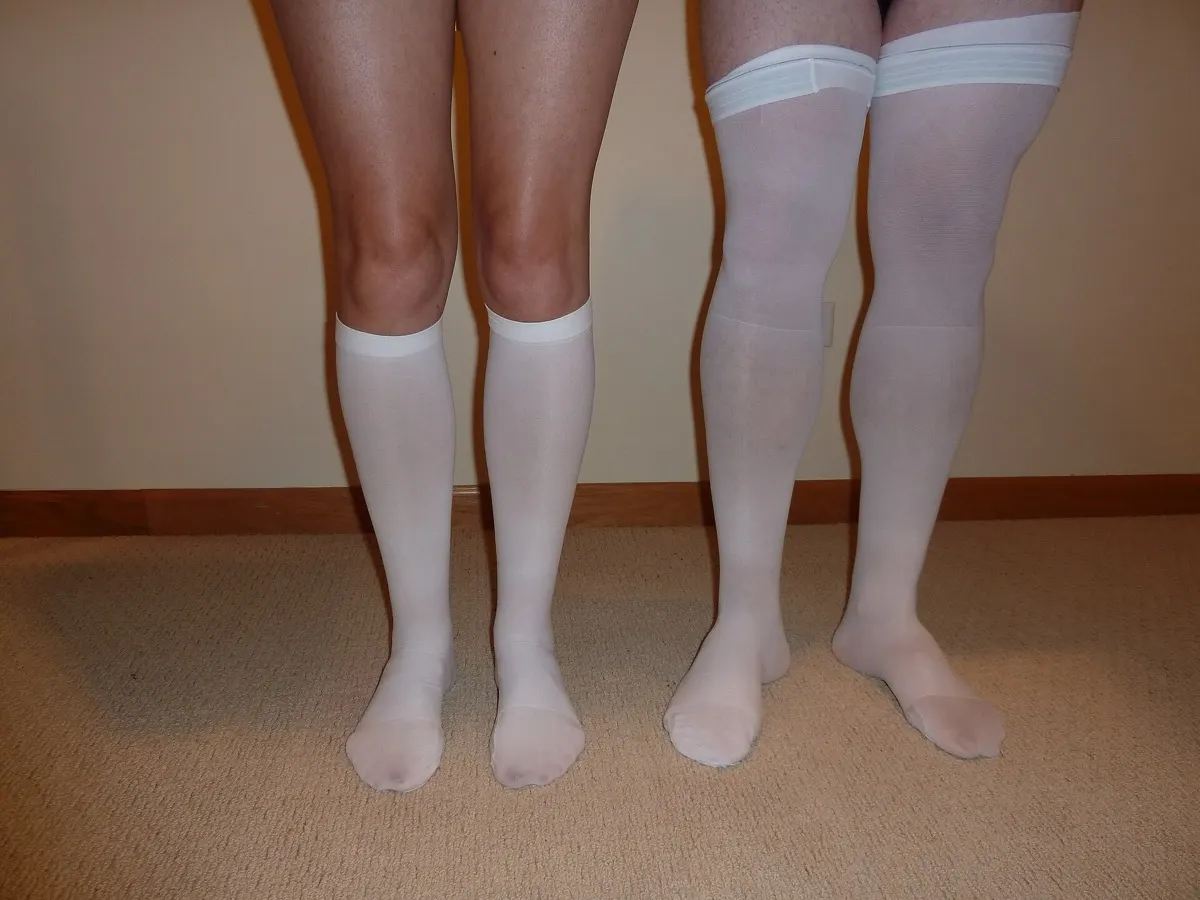
Knee-high stockings end just below the knee. They are the most commonly used length and suit most people with ankle swelling, calf aching and varicose veins in the lower leg. They are easier to put on, stay up better and are more comfortable in Singapore’s warm climate.
Thigh-high compression stockings
Thigh-high stockings extend to the upper thigh, usually with a silicone grip band. They are sometimes used when veins in the thigh are involved or when swelling extends above the knee. They can roll down or be hard to wear in the heat, and studies have not shown a clear advantage over knee-high stockings for most people. If you are unsure, start with the advice of a clinician.
What about TED compression stockings?
TED stockings are anti-embolism stockings given to people who are in bed or have limited movement, such as in hospital after surgery. They lower the risk of blood clots during that period. They are not the same as everyday compression stockings for vein symptoms, and they are not a long-term treatment for varicose veins. Follow your hospital team’s advice on when to use them.
Who should be careful?
Get advice before using compression if you have:
- Reduced blood supply to the legs (peripheral arterial disease)
- Severe heart failure
- Diabetes with reduced sensation in the feet
- Skin infection, fragile skin or an open wound
- Allergy to latex or the stocking material
Putting them on and looking after them
- Put them on first thing in the morning, before swelling builds.
- Use rubber gloves or a donning aid for grip and to protect the fabric.
- Smooth out wrinkles, as folds can dig into the skin.
- Wash as the label instructs and replace them regularly, since the elastic weakens with wear. Many brands suggest every three to six months of daily use.
- Check your skin every day for redness, blisters or pressure marks.
Stop and seek advice if you have numbness, colour changes in the toes, increasing pain or skin damage.
Where compression fits
Compression is often combined with walking, leg elevation and healthy weight (see how to prevent varicose veins). If you are choosing stockings specifically for varicose veins, our guide to compression socks for varicose veins goes deeper. For an overview of buying and fitting options locally, see this page on compression stockings in Singapore.
NICE guidance (CG168) does not recommend compression as the main treatment for varicose veins if a procedure is suitable, but it can help if you are waiting for treatment, or if procedures are not right for you.
Choosing the right size and style
Fit decides whether stockings help or just annoy. Ankle and calf measurements, taken in the morning, should match the size chart of the product, not your shoe size. Other choices include:
- Open-toe or closed-toe. Open-toe styles are cooler and easier to wear in warm weather.
- Fabric and finish. Sheer, cotton-blend and microfibre options exist. Breathable materials are more comfortable in Singapore’s climate.
- Colour. Skin-tone, black and patterned designs all work the same way.
If you are between sizes, or your legs are unusually shaped or very swollen, a professionally measured or made-to-measure stocking is a better choice than an off-the-shelf one.
When to see a doctor
See a doctor before or soon after starting compression if:
- Your legs are swollen on most days
- Skin near your ankle is darkening, hardening or itchy
- You have an ulcer or any sore that is slow to heal
- The stockings cause pain, numbness or skin damage
- You are not sure you are using the right strength or size
You can also try the vein symptom check or learn how to find a vein specialist.
When it’s an emergency: sudden pain, swelling, warmth or redness in one leg can be a blood clot. Do not rely on stockings. If you also have breathlessness, chest pain or cough up blood, call 995 or go to the nearest emergency department straight away.
Frequently asked questions
How do compression stockings work?
They apply the most pressure at the ankle and gradually less up the leg. This squeezes the veins, narrows them slightly and helps the calf muscle pump push blood upwards instead of letting it pool. That reduces swelling and the feeling of heavy, tired legs.
Do I need knee-high or thigh-high compression stockings?
For most people with leg aching and swelling, knee-high stockings are as effective and far easier to wear. Thigh-high versions are usually reserved for specific situations, such as extensive disease in the thigh. A doctor or trained fitter can advise.
Are TED stockings the same as compression stockings?
Not quite. TED (thromboembolism-deterrent) stockings are anti-embolism stockings used for patients with limited mobility in hospital, for example after surgery. Everyday medical compression stockings for chronic vein problems are designed differently and come in a wider range of strengths.
Can I wear compression stockings every day?
Many people with chronic vein symptoms wear them during waking hours. Put them on in the morning before swelling builds and take them off at night, unless a doctor tells you otherwise. Check your skin daily.
Sources and further reading
This article is general information, not personal medical advice. Please speak to a doctor about your own symptoms. How we create our content.