What is sclerotherapy?
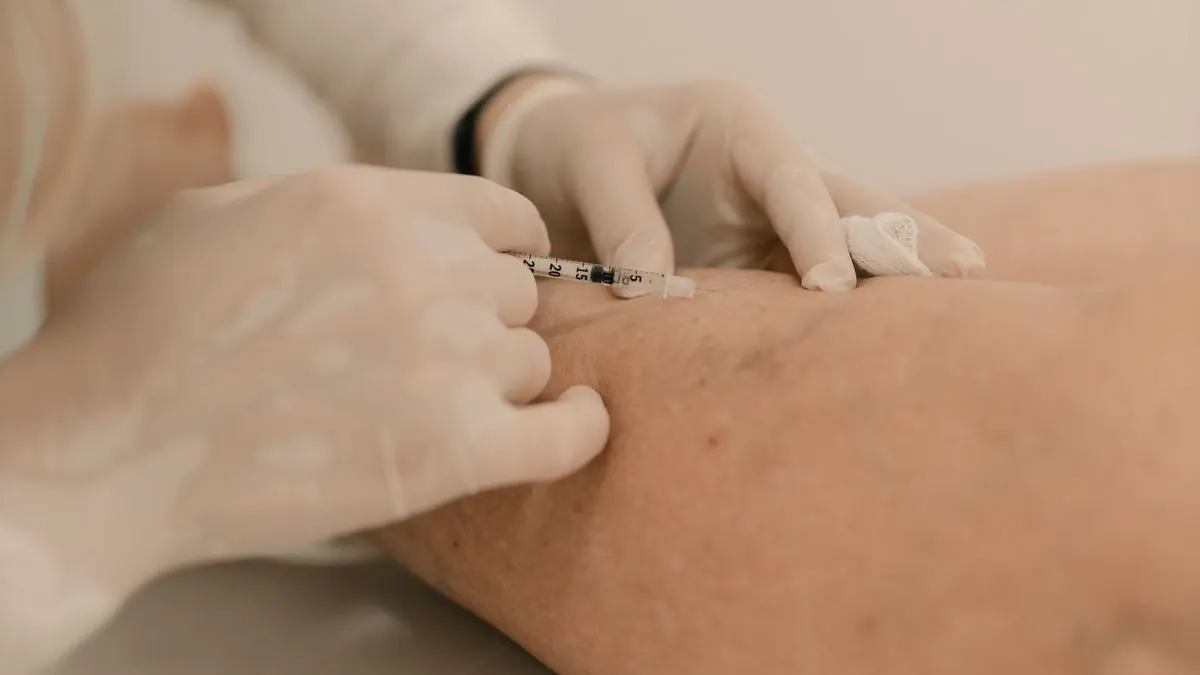
Sclerotherapy is a minimally invasive procedure that closes unwanted veins by injecting a medicine, called a sclerosant, directly into them. If you have been asking “what is sclerotherapy?”, the short answer is that it treats a vein from the inside, with no cuts and no stitches.
The sclerosant irritates the vein’s inner lining. The vein walls stick together and the vein turns into a thin scar-like cord. Your body slowly absorbs it, and blood carries on flowing through healthy veins nearby. Removing the faulty vein from the circulation does not harm your legs, because the remaining veins take over.
This page covers sclerotherapy for veins in the legs. For a side-by-side look at every option, see varicose vein treatments compared.
How sclerotherapy works
Healthy leg veins have one-way valves. In varicose and spider veins the valves leak, so blood pools and the vein enlarges (venous reflux). Closing the leaking vein removes the pool. The procedure is aimed at the veins you can see or feel, and sometimes at the larger vein that feeds them.
There are two main forms of this treatment:
- Liquid sclerotherapy uses the sclerosant as a liquid. It is used for small veins.
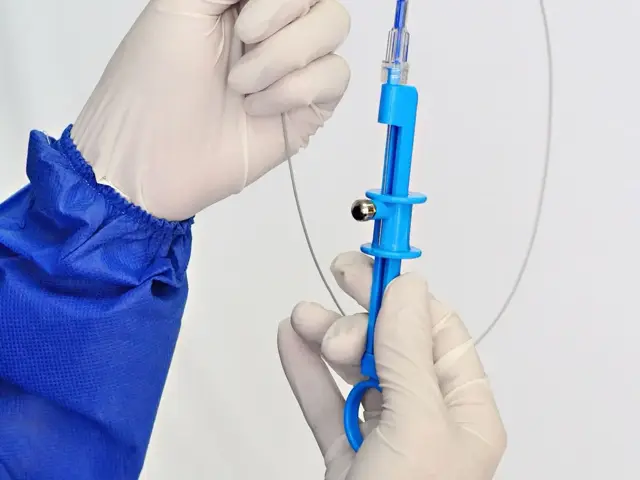
- Foam sclerotherapy mixes the sclerosant with gas to make a foam, which fills larger veins and pushes blood out of the way so the medicine contacts the vein wall more effectively.
Foam sclerotherapy
Foam is the version most often used for larger veins. Because foam is visible on ultrasound, the doctor can watch it move along the vein and avoid it reaching the deep veins. Guidelines such as ESVS 2022 and NICE CG168 recognise ultrasound-guided foam sclerotherapy as an option for varicose veins, with NICE placing it after endothermal ablation (heat-based closure) for suitable patients and as an alternative when other options are not suitable.
Foam can also treat recurrent veins and veins left behind after other procedures.
Sclerotherapy for varicose veins
Sclerotherapy for varicose veins is typically done under ultrasound guidance. Your specialist first scans your legs to see where the reflux starts. This matters because treating only the visible bulge, while the leaking source is left alone, often leads to the veins coming back.
It suits people with:
- Smaller or medium varicose veins and branch veins
- Recurrent veins after previous surgery
- Veins that are hard to reach with other methods
For a large, leaking main saphenous vein, other methods such as radiofrequency or laser ablation tend to be the first choice, and sclerotherapy may then be used to clear the remaining branches. The best option depends on your scan, which is why a proper assessment comes first. If you want to know how doctors assess these veins, read our guide to varicose veins.
Sclerotherapy for spider veins
Sclerotherapy for spider veins uses very fine needles and a liquid sclerosant to treat the tiny red, blue or purple veins close to the skin. It is one of the most widely used treatments for them, and it shares this page because the technique is the same. To compare it with laser and other approaches, see spider vein treatment, and to understand the condition itself, read about spider veins.
What to expect: the sclerotherapy treatment step by step
A typical sclerotherapy treatment goes like this:
- Assessment. Your doctor takes a history, examines your legs and often does a duplex ultrasound.
- Preparation. The skin is cleaned. You lie down with your legs slightly raised.
- Injections. Using a fine needle, the doctor injects the sclerosant into each targeted vein. You may feel stinging or cramping for a short time.
- Compression. Bandages or stockings are applied straight away to keep the closed vein compressed.
- Walking. You are usually asked to walk around for a short time before you leave.
A session usually lasts between about 15 and 45 minutes depending on how many veins are treated. No general anaesthetic or hospital stay is needed. Our guide to recovery after varicose vein treatment covers aftercare in more detail.
Sclerotherapy before and after: what you will notice
Sclerotherapy before and after photos can look dramatic, but results vary between people, and photos online should be read with caution. What is realistic:
- First days. Mild redness, itching, tenderness and bruising along the treated veins. Treated veins may feel like firm cords.
- First weeks. Bruising fades. Some people see brownish lines or marks over the treated vein, caused by iron from trapped blood.
- Weeks to months. The vein gradually fades or disappears. Spider veins often improve within several weeks; larger veins can take longer.
- Follow-up. Some veins need a second or third session, and a few remain visible.
Wearing compression and walking daily generally helps recovery. Your doctor will advise on how long to wear stockings and when to avoid strenuous exercise or hot baths.
Is sclerotherapy safe?
For most people sclerotherapy is safe, and it has been used for decades. But no procedure is risk-free. Is sclerotherapy safe for you specifically? That depends on your health and who performs it.
Common, usually temporary effects - Bruising, tenderness, itching - Pigmentation (brown marks) that fades over months - Tiny new red vessels (“matting”) around the treated area - Hard lumps of trapped blood in the vein, which can be released by the doctor
Uncommon or rare risks - Allergic reaction to the sclerosant - Skin ulcers if medicine leaks outside the vein - Superficial or deep vein clots - Visual disturbance, migraine-like symptoms or, very rarely, stroke-like symptoms with foam
Sclerotherapy is usually avoided during pregnancy and when you have an active blood clot, and doctors take extra care if you have had clots before or have a known heart condition involving a hole between the heart’s chambers. Always tell your doctor about your full medical history and any allergies.
Limitations to be aware of
- Sclerotherapy does not prevent new veins from developing. Genetics, pregnancy and long hours on your feet still play a role, so prevention habits are still worthwhile.
- Results are not guaranteed, and repeat treatment is common.
- Cosmetic-only treatment of spider veins is generally not covered by MediSave or insurance in Singapore. See varicose vein treatment costs in Singapore for how claims are generally handled.
When to see a doctor
See a doctor if you have visible veins that ache, swell, itch or are changing, or if you are thinking about treatment. A scan first tells you whether sclerotherapy is the right option. You can start with our vein symptom check or read about finding a vein specialist. For a practical overview from a clinic, see this explanation of injection sclerotherapy.
After treatment, contact your doctor promptly if you develop increasing pain, a hot red area, a new skin sore, or a swollen leg.
Call 995 or go to the nearest emergency department if, after a vein procedure, you develop sudden breathlessness, chest pain, coughing up blood, fainting, sudden vision problems, or face weakness or slurred speech. A swollen, painful, warm leg also needs same-day medical attention.
Frequently asked questions
What is sclerotherapy in simple terms?
It is a procedure where a doctor injects a medicine into a problem vein. The medicine irritates the inner lining, the vein closes and shrinks, and blood is rerouted through healthier veins nearby. Over weeks to months, the closed vein fades.
Is sclerotherapy safe?
For most people it is considered a safe, well-established procedure with a low rate of serious problems. Common effects such as bruising or skin staining are usually temporary. Rare risks include allergic reactions, clots and skin ulceration. It is not suitable in pregnancy or when you have a current blood clot, so a proper assessment first matters.
Does sclerotherapy hurt?
The needles are very fine and most people describe mild stinging or cramping for a short time as the medicine goes in. No general anaesthetic is needed.
Can sclerotherapy be used for spider veins?
Yes. Liquid sclerotherapy with very fine needles is a standard option for spider veins. Because the same technique is used, we cover it on this page; our spider vein treatment guide compares it with laser and other approaches.
When will I see the final result?
Spider veins often fade over several weeks, while larger veins can take a few months. Some veins need more than one session.
Sources and further reading
This article is general information, not personal medical advice. Please speak to a doctor about your own symptoms. How we create our content.