What are spider veins on the feet?
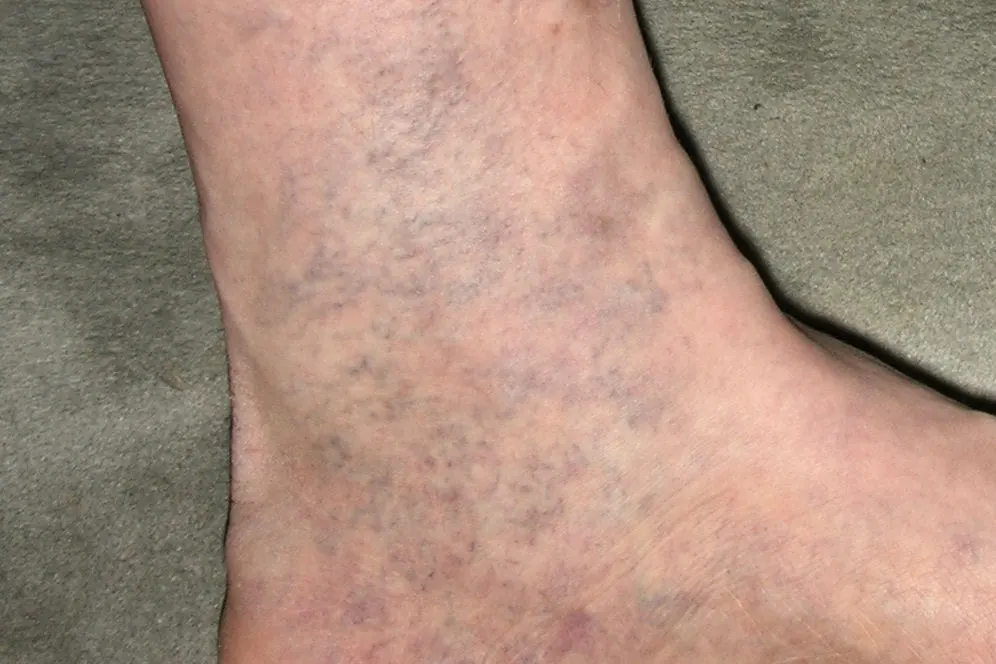
Spider veins on feet are tiny, widened blood vessels that show through the skin on the top of the foot, around the ankle bone or along the inner and outer edge of the foot. They look like fine red, blue or purple threads, and may branch like a web or fan out in a star shape. They are typically flat and well under 1 mm wide, so you usually cannot feel them.
Doctors call them telangiectasias, and in the CEAP classification of venous disease they are grade C1. They are very common, and for most people they are a cosmetic concern rather than a health problem. If you are new to the topic, our general guide to spider veins explains the basics.
The ankle and foot are a special case, though. The veins here carry the highest pressure in the whole leg when you stand, so changes at the ankle can sometimes tell a doctor something about the veins higher up.
Why spider veins appear on the ankles and feet
Your leg veins use one-way valves and the squeeze of your calf muscles to push blood back up to the heart. At the ankle, the column of blood above is at its heaviest. If valves higher up the leg leak, the extra pressure is transmitted downwards, and the smallest veins at the ankle are often the first to widen.
Factors that make spider veins on the ankles and feet more likely include:
- Family history. A tendency to vein problems often runs in families.
- Age. Vein walls and valves slowly lose elasticity.
- Female hormones and pregnancy. Hormones relax vein walls, and pregnancy adds volume and pressure.
- Long hours standing or sitting. Common in nursing, retail, food service, teaching and desk work.
- Excess weight. More pressure through the leg veins.
- Heat. Warm, humid weather makes veins dilate, which is worth noting in Singapore and across Southeast Asia.
- Past injury or surgery to the leg or foot.
Ankle flare: corona phlebectatica
One pattern deserves particular attention. Corona phlebectatica, often called ankle flare, is a fan-shaped or crown-like cluster of small veins around the inner or outer edge of the ankle and foot. It may include tiny blue or purple veins, red dots and, sometimes, small flat patches of discoloured skin.
In the ESVS 2022 guideline on chronic venous disease, this pattern is recognised as a possible early sign that venous pressure is raised in the leg. It does not mean you have a serious condition. It does mean that, if it appears together with other symptoms, a proper vein check is a good idea.
Compare the two situations:
| Pattern | Usual meaning |
|---|---|
| A few isolated fine veins, no symptoms | Usually cosmetic only |
| Fan of veins at the ankle, with heaviness, swelling or itching | Worth a duplex scan for venous reflux |
| Veins plus darkened, hard or inflamed skin near the ankle | Needs medical assessment soon |
You can read more about how this fits into the wider picture in our guide to chronic venous insufficiency.
Symptoms that suggest more than a cosmetic issue
Spider veins on the feet and ankles are often completely silent. Seek an assessment if they come with:
- Aching, heaviness or tiredness in the legs, worse by evening
- Swelling around the ankles (see swollen ankles)
- Itching, burning or a tight feeling in the skin
- Brownish discolouration around the ankle
- Dry, scaly or eczema-like skin on the lower leg
- Any sore or wound near the ankle that is slow to heal
- Larger bulging veins elsewhere in the leg (see varicose veins)
How doctors check them
A doctor will look at both legs while you stand, ask about symptoms and family history, and examine the skin. If there are signs of venous disease, the usual next step is a duplex ultrasound scan. It is painless, uses no radiation, and shows whether blood is flowing backwards in the deep or surface veins, and which veins are responsible.
Guidelines such as NICE CG168 recommend this scan for people with symptomatic varicose veins. For spider veins alone, a scan is not always needed, but it is often sensible when the ankle is involved because the chance of an underlying reflux is higher.
Can you treat spider veins on the feet?
If the veins are harmless and not bothering you, you do not need to treat them. If you want them treated for appearance or comfort, options include injection treatment (sclerotherapy), certain lasers and other vein-targeting devices. Our guide to spider vein treatment compares them.
Treatment of the feet and ankles has some special considerations:
- Healing can be slower at the ankle, because of gravity and lower tissue padding.
- Bruising and staining after treatment may be more noticeable here than on the thigh.
- Reflux first. If a scan shows leaking valves higher up, treating those first generally gives the spider veins a better chance of staying away.
- Results vary. Several sessions are common, and new veins can appear over time.
What you can do yourself
Simple habits do not remove spider veins, but they can ease symptoms and support circulation:
- Move regularly. Walk, flex your ankles and avoid long unbroken stretches of standing or sitting.
- Raise your legs above heart level when resting, if swelling bothers you.
- Keep a healthy weight.
- Choose comfortable, supportive footwear.
- Ask a clinician whether graduated compression stockings suit you, particularly if you have swelling.
- Protect the skin of the feet and ankles from knocks and scratches.
Our guide to preventing spider veins has more detail.
When to see a doctor
Book an assessment if the veins on your feet or ankles are increasing, if you notice a fan-shaped pattern, or if you have any of the symptoms listed above, especially swelling, skin changes or a sore that is slow to heal. You can start with our quick vein symptom check or learn how to find a vein specialist.
Seek care sooner if a vein becomes red, hard, hot and painful, or if a small vein bleeds. For bleeding, lie down, raise the leg and press firmly on the spot, then get medical help.
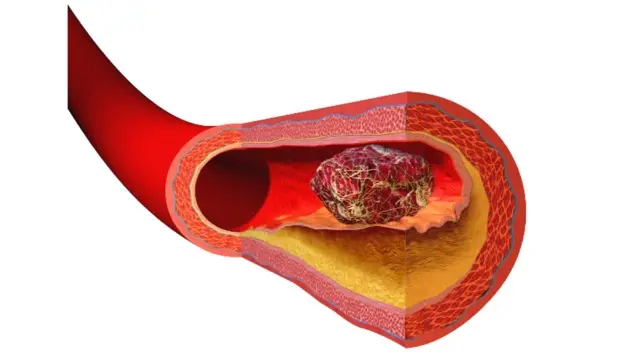
When it’s an emergency: sudden pain, swelling, warmth or redness in one leg can be a deep vein thrombosis, which is a different problem from spider veins. If it comes with sudden chest pain, breathlessness or coughing up blood, call 995 or go to the nearest emergency department straight away.
Frequently asked questions
Are spider veins on the feet dangerous?
On their own, they are usually not dangerous. They become more important if they appear with swelling, aching, skin changes or a fan-shaped pattern at the ankle, because these can point to underlying venous reflux.
What is corona phlebectatica?
Corona phlebectatica, also called ankle flare, is a fan or crown of tiny blue, purple or red veins around the edge of the foot near the ankle. Doctors treat it as a possible early marker of chronic venous disease.
Why do I get spider veins on my ankles?
Pressure in the veins is highest at the ankle because blood has to travel upwards against gravity from there. Genetics, age, pregnancy, hormones, long hours on your feet and leaking valves all raise that pressure over time.
Can spider veins on the ankles be removed?
Yes, they can often be treated with methods such as injection treatment or laser. Because ankle veins are more likely to be linked to reflux, a scan beforehand is usually sensible, and results can vary.
Do spider veins on the feet mean poor circulation?
Not usually. Spider veins relate to the small surface veins, not the arteries that supply blood to your feet. Cold, pale or painful feet are a different problem and deserve their own medical check.
Sources and further reading
This article is general information, not personal medical advice. Please speak to a doctor about your own symptoms. How we create our content.